Designing an Organization
From First Designer to Design Function at Piramal Finance
Fintech
D2C
App & Website
0 to 1
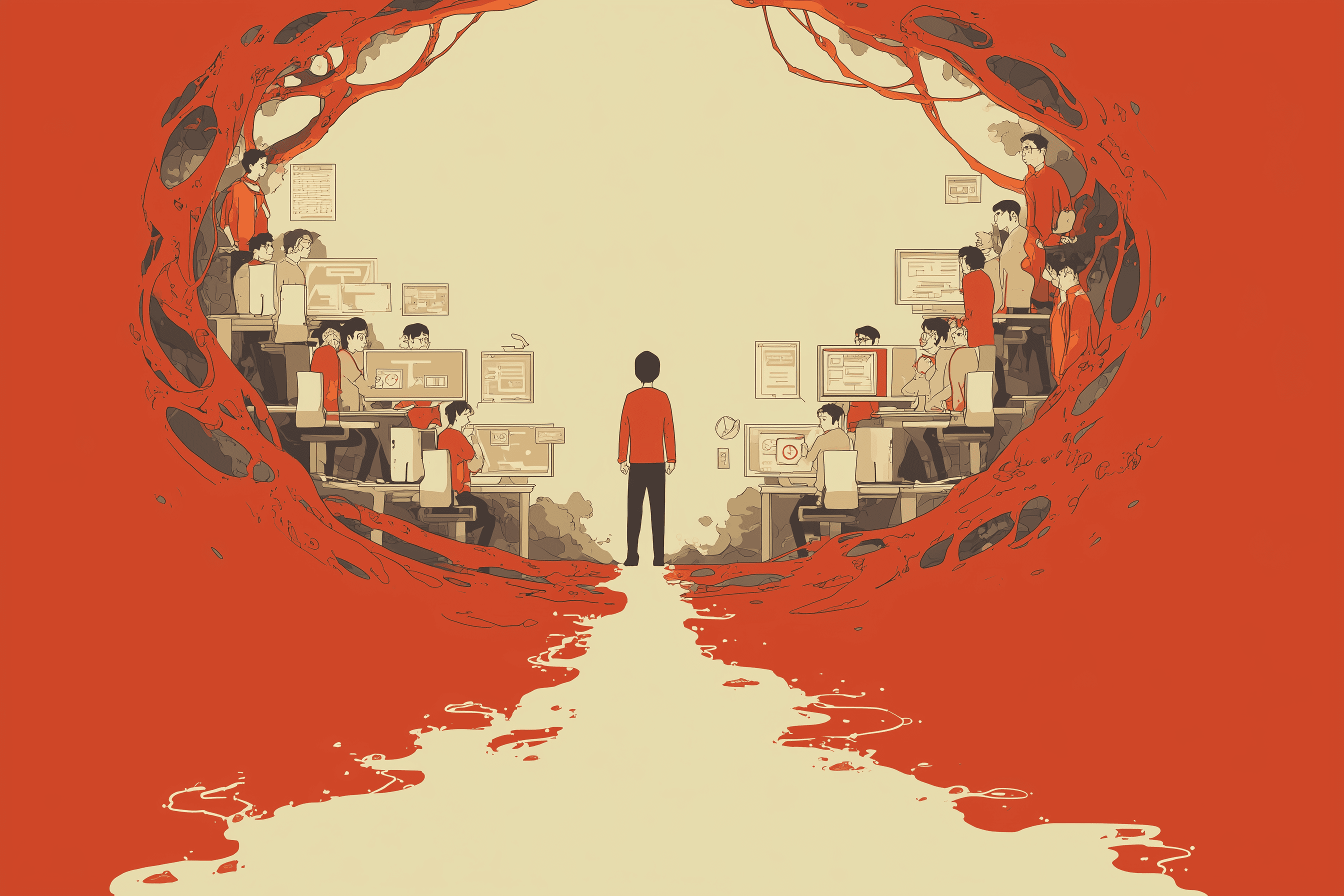
When I joined Piramal Finance in 2021, design didn’t exist as a function.
There were no designers, no UX process, and no shared understanding of what design contributed beyond screens. Product decisions were driven by business urgency and engineering feasibility. Most internal workflows were paper-driven. Customer and partner experiences were fragmented across third-party tools and legacy systems.
At the same time, the company was entering a phase of rapid expansion. The acquisition of DHFL had significantly increased scale — more branches, more customers, more operational complexity — but the digital infrastructure hadn’t evolved at the same pace.
Design wasn’t missing because it wasn’t needed.
It simply hadn’t been built yet.
Design wasn’t missing because it wasn’t needed.
It simply hadn’t been built yet.
This case study is about building that function from zero — not just hiring designers, but creating the conditions where design could influence how products were imagined, built, and scaled across the organization.
The Starting Point: Complexity Without Ownership
Piramal Finance operates in a uniquely complex environment. Unlike consumer tech companies, most users are not end customers but internal stakeholders — sales teams, underwriters, operations staff, legal teams, and partners working across hundreds of branches.
In 2021:
There were no in-house digital products.
Most systems were vendor-driven or were third-party subscriptions.
Internal workflows relied heavily on paper movement between branches.
Product decisions optimized for speed, not experience.
This created predictable outcomes: slow turnaround times, operational friction, and inconsistent user experiences.
The challenge wasn’t to redesign a product.
It was to introduce design into an ecosystem that had never worked with it before.
Earning a Seat at the Table
One of the earliest lessons in building design functions is that influence cannot be demanded — it has to be earned.
Early in my time at Piramal, I focused on a single problem that had clear business visibility: Channel Partner Onboarding.
At the time, onboarding a partner took roughly 10 days. The process involved paper forms, manual KYC verification, document movement across teams, and repeated back-and-forth communication.
Instead of introducing process or design frameworks, the focus was simple: solve a real business problem end-to-end.
The team redesigned the onboarding journey into a guided digital flow:
API-based KYC verification
Real-time document validation
Automated partner code generation
Reduced dependency on manual operations
The result was immediate and visible.
Activation time reduced from 10 days to under 10 minutes. Over 2 lakh partners were onboarded within a year, contributing to nearly half of the organization’s business.
More importantly, this shifted perception internally. Design was no longer seen as visual improvement — it became associated with business outcomes.
That credibility made everything that followed possible.
Activation time reduced from 10 days to under 10 minutes. Over 2 lakh partners were onboarded within a year, contributing to nearly half of the organization’s business.
From Individual Output to Organizational Capability
The next challenge wasn’t more design work. It was scale.
As more product initiatives emerged, it became clear that design couldn’t remain centralized around one person. The goal shifted from producing good designs to building a system that could consistently produce good outcomes.
The first hires were not specialists. They were designers comfortable with ambiguity — people who could navigate conversations with sales, underwriting, legal, and engineering teams while owning products end-to-end.
Every hire was also an act of evangelism. The idea of design itself had to be sold repeatedly — in interviews, in product meetings, and in leadership discussions.
As the team grew, new tensions emerged.
The Real Problems of Scaling Design
Direct vs
Indirect
A major insight during this journey was that most experience problems originated internally.
When underwriting tools were slow, customers waited longer. When sales workflows were complex, onboarding suffered. Improving employee experience directly improved customer experience.
This reframed design’s role within the organization. Instead of focusing only on customer-facing interfaces, design began improving the systems behind the customer journey.
Building Systems That Scale
As the team crossed ten designers, inconsistency became the next challenge. Each designer worked differently, which created unpredictability for product and engineering teams.
The six-phase UX lifecycle was introduced not as governance, but as shared language:
Discover — Understanding user needs
Define — Framing the problem
Design — Prototyping solutions
Validate — Testing with users
Deliver — Production ready
Measure — Tracking impact
The goal was clarity, not control.
Alongside this, the Mudra design system emerged as a way to standardize common patterns across products. Rather than a component library, it became an efficiency layer that allowed teams to move faster without reinventing foundational elements.
Process and systems existed to reduce friction — not to restrict creativity.
The Ecosystem That Emerged
Over time, the design organization supported the creation of an interconnected product ecosystem:
A unified sales application managing the lead-to-disbursement lifecycle
Credit and underwriting systems improving evaluation speed and accuracy
Operations platforms supporting hundreds of branches
Horizontal platforms shared across more than thirty products
A customer application enabling direct loan journeys
Execution was driven by product designers across teams, but enabled by shared principles, systems, and governance.
Impact Beyond Screens
During this period, Piramal Finance grew from approximately ₹5,000 Cr to ₹75,000 Cr in assets under management.
Millions of users adopted digital products that previously did not exist within the organization. Loan processing volumes increased significantly, and operational workflows became faster and more predictable.
The most meaningful impact, however, was cultural.
Design moved from being absent to becoming part of how problems were framed. Product conversations began earlier. Experience considerations became part of business discussions.
The shift wasn’t just in interfaces — it was in decision-making.
What Changed for Me as a Leader
Building design at scale required a personal transition as well.
Early on, my value came from solving problems directly. Over time, the role shifted toward enabling others to solve them. Success became less about individual output and more about building systems, growing leaders, and creating alignment across teams.
The hardest lesson was learning that design maturity comes from distributed ownership, not centralized excellence.
What I Would Do Differently
If I were to start again, I would invest earlier in measurement infrastructure. For the first two years, success was visible but not always quantified. Embedding UX metrics and observability earlier would have accelerated adoption further.
I would also decentralize decision-making sooner. Strong ownership at the product level scales impact faster than centralized quality control.
Closing Thought
Building a design function isn’t a project with an end date. It’s continuous organizational work — balancing people, process, and product while adapting to the evolving needs of the business.
At Piramal Finance, design didn’t arrive fully formed.
It was built — one decision, one product, and one team at a time.